

Innovation Grant Projects
CESFAS aims to build research capacity in agriculture value-added across the campus by supporting seed projects. These research projects address agriculture and food system issues or challenges and produce tangible results that can lead to larger research initiatives, new intellectual property, improved industry performance, or new business investments. The projects seek to strengthen the research enterprise throughout New Mexico by fostering interdisciplinary teams focused on value-added research that contributes to the state’s economic growth, sustainability, and community resilience in agricultural and food systems. The projects involve at least two NMSU colleges.and include CESFAS-affiliated faculty.
AI-Driven Predictive Breeding of Alfalfa to Enhance Drought Resilience, Yield, and Forage Quality for Sustainable Feed System in New Mexico

Description:
The project aims to advance Alfalfa forage yield, nutritional quality, disease and pest resistance under water-challenged drought conditions of New Mexico (NM) and Southwest USA. The tangible outcome includes Machine Learning and Deep Neural Networks based Phenomics, Genomic, and Multimodal predictive tools for rapidly identifying suitable germplasm with appropriate desirable trait packages, will also generate DNA sequence data for further investigation of drought tolerance mechanism in alfalfa. Alfalfa, one of the most important cash crops in the state of NM, has been losing acreage due to recurrent drought in this region and reduced profitability. Alfalfa breeding progress has been hindered by its complex genetics and perennial life cycle. Traditional phenotype-based breeding for forage yield and quality is labor-intensive, costly, and subjective, limiting the pace of genetic improvement. There is also a lack of integrated, cost-effective screening protocols for yield and nutritional metrics, as well as predictive analytics, to facilitate and rapid efficient selection. We propose initiating AI-driven predictive breeding to advance alfalfa breeding and livestock feed systems for NM farmers and animal producers. We initiated preliminary work in 2025 and started generating some preliminary data on forage yield, quality, and nutritional traits. We plan to sequence our germplasms to generate robust DNA dataset, use UAV flights to capture reflectance more closely, these intensive data will then be used AI based predictive models to improve selection accuracy and breeding efficiency. Collaborating with the Ruminant Nutrition, and Remote Sensing team housed at NMSU, and industry partner Mountain View Seeds, Crop Characteristics, Servi Tech, and New Mexico Growers Association to deliver tools and data for further larger grants to work towards improving Alfalfa to make it sustainable and profitable for NM and Southwest USA.
Key Faculty:
- Md. Abdullah Al Bari, PI, PES
- Clint Loest, ARS, Co-PI
- Michaela Buenemann, GES, Co-PI
The Science of Sotol: A New Era for an Ancient Spirit
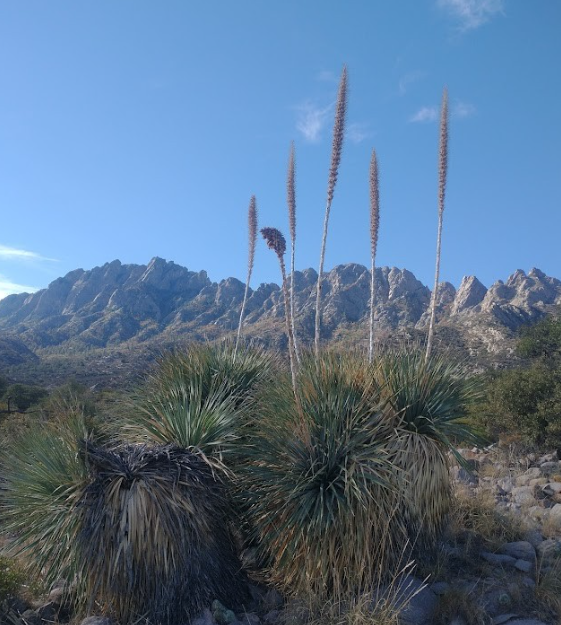
For centuries, sotol has been harvested from the wild deserts of the U.S.–Mexico borderlands, prized for its resilience, cultural heritage, and the distinctive spirit it produces. Today, demand is rising faster than wild populations can sustain.
Our work bridges that gap. By combining genomics, plant biology, and chemistry with on-the-ground partnerships between researchers, distillers, and growers, we are building the scientific foundation to cultivate sotol as a sustainable crop. The goal is simple: protect wild sotol, support a growing craft spirits industry, and establish a new agricultural opportunity for arid lands.
This is a project about plants, people, and places, and ensuring that one of the Southwest's most iconic species has a future as rich as its past.
Key Faculty:
- Sara Fuentes-Soriano
- Jennifer Randall
- Donovan Bailey
Other NMSU Collaborators:
- Omar Holguin
- Luis Sabillon Galeas
- Sergio Martinez-Monteagudo
- Claudia Galvan
- Chaddy Robinson
External Collaborators:
- José Ines Palma Escamilla, Universidad Autonoma de Chihuahua
- Chris Schaefer, Dry Point Distillers, Las Cruces NM
The New Caramel: Using New Mexico Pecan (Carya illinoinensis) Shells as a Source for Caramel Colorant Alternatives for Food Applications
Description:
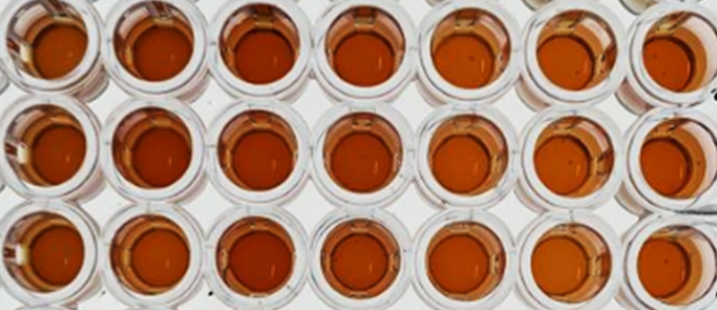
The food industry is currently undergoing a significant shift toward "clean label" products, as consumers increasingly demand natural, transparently sourced ingredients over synthetic alternatives. While caramel color has long been the industry standard for achieving brown hues, rising safety concerns have created a critical need for safer, plant-based replacements. This project addresses that challenge by exploring the upcycling of abundant New Mexico pecan shell byproducts into a sustainable, natural pigment. By extracting bioactive phenolic compounds, we aim to provide a functional alternative that delivers consistent color and antioxidant properties.
Key Faculty:
- Gonzalo Miyagusuku-Cruzado, PI
- Luisa F. Alvarez-Chacon (Graduate Student)
Improving the Bioavailability of Disease Preventing Compounds in Chile Peppers
Description:
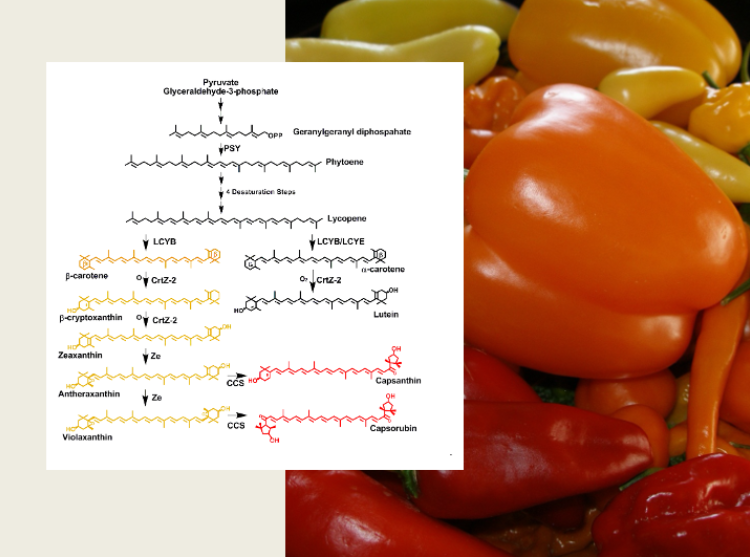
Carotenoids are the most used natural pigments due to their varying hues of yellow, orange and red. Although humans cannot produce carotenoids, we require them in our diet to reduce the risks of chronic diseases. Chile peppers (Capsicum species) produce a unique carotenoid, capsanthin, and tomatoes (Lycopersicum species) produce lycopene – both of which have powerful antioxidant activity. Currently, carotenoid dietary supplements are available for these compounds in their isolated free forms. Contrary to supplements, fruit and vegetable (like chile peppers) carotenoids accumulate as free and esterified carotenoids. An overarching question is whether our bodies prefer to absorb free carotenoids or esterified carotenoids. Based on the unique esterified carotenoids in chile peppers, our aim is to customize the human in vitro digestion protocol for chile pepper esterified carotenoids like capsanthin to assess the health value of red chile. This aim includes two objectives: 1) test esterase/lipase enzymes from different animal sources on chile pepper and tomatoes. Chile peppers and tomatoes are rich in diverse carotenoids ranging from beta-carotene, lutein, capsanthin, and lycopene; 2) use predictive computer software to model the enzyme-substrate binding of esterified and free carotenoids with the esterase/lipase enzymes in a human gut environment. This project will deliver groundbreaking pharmacokinetic insights while strengthening the chile pepper industry through rigorous scientific evidence of the health benefits that position chile peppers as a true disease preventative superfood.
Key Faculty:
- Lead, Ivette Guzman
- Matthew Guberman-Pfeffer
- Stephanie Walker
Microbiome-Guided Discovery of Functional Soil Microbes for Biofertilizer Development and Sustainable Chile Production in New Mexico
Description:
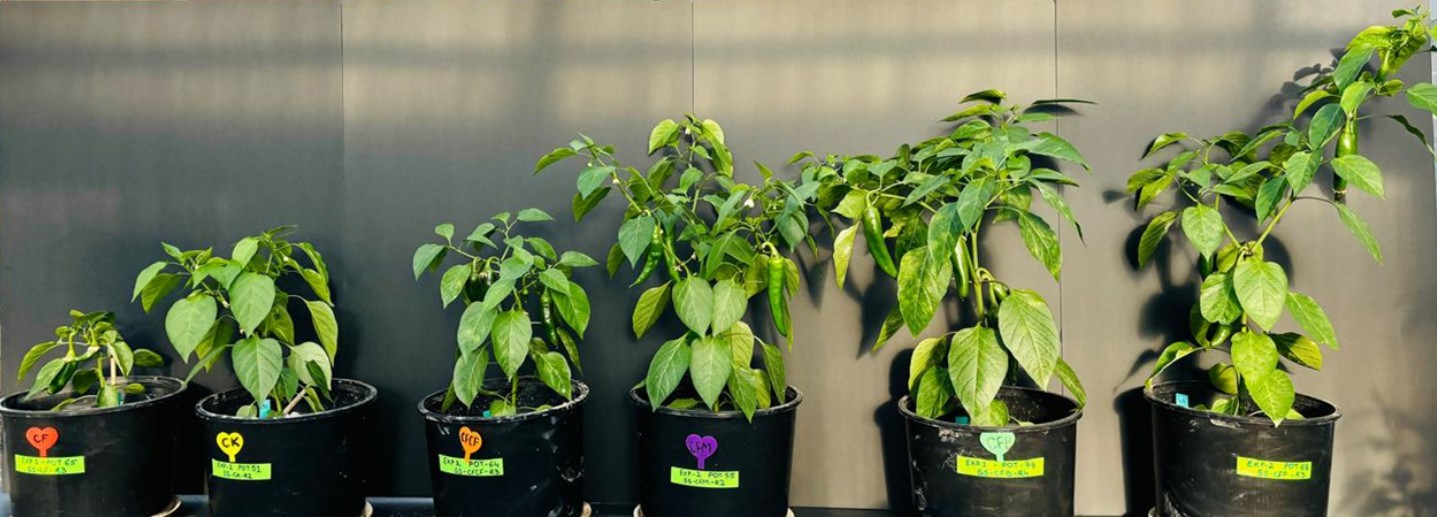
Chile pepper (Capsicum annuum L.), a cornerstone specialty crop in New Mexico agriculture, is constrained by arid to semi-arid conditions, low soil organic matter, and increasing irrigation uncertainty, which collectively limit nutrient retention, reduce fertilizer efficiency, and challenge production sustainability. Organic amendments such as composted manure, biochar, and cover crop residues represent practical strategies for improving soil health and productivity in arid agroecosystems. Despite their promise, the biological mechanisms through which these amendments regulate nutrient cycling and plant performance remain poorly understood, particularly in specialty crop systems. This project will generate high-impact preliminary data to address this gap by linking soil microbiome functional potential with nutrient cycling processes and chile plant performance. By directly connecting microbial genes, biochemical processes, and crop outcomes, the project establishes a mechanistic foundation for microbiome-guided soil management tailored to arid chile production systems.
Key Faculty:
- Dr. Xiufen “Sophia” Li (PI)
- Dr. April Ulery (Co-PI)
- Dr. Israel Joukhadar (Co-PI)
- Dr. Yanyan Zhang (Co-PI)
Engineering Biochar to Improve Conifer Seedling Production for Reforestation

Description:
This seed project develops locally sourced, value-added biochar as a partial replacement for peat/vermiculite/perlite in conifer seedling growing media, reducing imported inputs and creating markets for New Mexico woody and pecan by-products while supporting reforestation capacity. With wildfires increasing in frequency and severity, the need for artificial reforestation (seedling outplanting) continues to rise; and New Mexico is situated to ramp up nursery production of seedlings with the construction of the New Mexico Reforestation Center (NMRC). The objective of this project is to investigate locally-produced sources of biochar as an alternative component of nursery production growth media. We will produce and characterize biochars from regional forest-thinning, lumber yard, and pecan production residues. Then, we will test biochar-containing growth media mixes that meet property criteria for use in conifer seedling production based on current practices. Lastly, we will conduct greenhouse germination and growth studies to test seedling performance using biochar media mixes to assess extent of fit-for-purpose for reforestation tree species. This project brings together multiple areas of expertise, including woody biomass utilization and reforestation, to address a timely topic with potential economic and environmental benefits to nursery producers and reforestation efforts nationally.
Key Faculty:
- Jennifer Peters (PI), Assistant Professor, Plant & Environmental Sciences (PES)
- Catherine Brewer (Co-PI), Professor, Chemical & Materials Engineering (CHME)
- O. John Idowu, Professor (Co-PI), Professor, PES, and Extension Plant Sciences
Managing for Resilience: Soil Health, Root Architecture, and Value-Added Opportunities Under Water Stress in Arid Region Pecan Systems
Description:
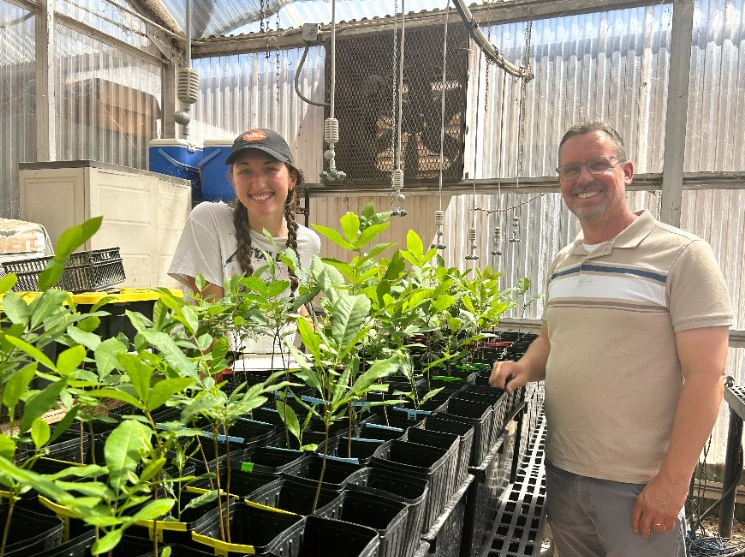
Healthy soils are foundational to productive pecan orchards, and sustainable orchard management practices may offer new ways to support New Mexico’s pecan industry. Through greenhouse experiments, this project examines how different pecan soil management practices influence pecan seedling development, responses to water stress, and relationships with mycorrhizal fungi. The project will also explore opportunities affecting root relationships with the edible pecan truffle, Tuber lyonii, as a value-added crop to support sustainable and resilient pecan production. Through a mixed-methods approach, including seedling physiological measurement, next-generation genetic sequencing, advanced microscopy, and CT imaging, our research will provide new insights into factors affecting sustainable pecan production.
Key Personnel:
- Richard Heerema, Ph.D., Pecan & Pistachio Specialist/Professor (PI)
- McKenzie Stock, M.S., Ph.D. Candidate, Plant & Environmental Sciences
- Borys Drach, Ph.D., Associate Professor, Director of QCAM Consortium (co-PI)
- Jennifer Peters, Ph.D., Assistant Professor, John T. Harrington Forestry Research Center (co-PI)
- Jennifer Randall, Ph.D., Professor, Director of Molecular Biology & Interdisciplinary Life Sciences (co-PI)
- Samyi Belteton, Ph.D., Director, Microscopic Imaging, Research Cores Program (co-PI)